Guides
Council asked for a Level 5 arborist report: what next?
AQF Level 5 refers to the arborist's qualification, not a special type of report. Council is asking for an assessment prepared by a consulting arborist who holds the Diploma of Arboriculture. This guide explains what that means, what the report will cover and what to prepare before requesting a quote.
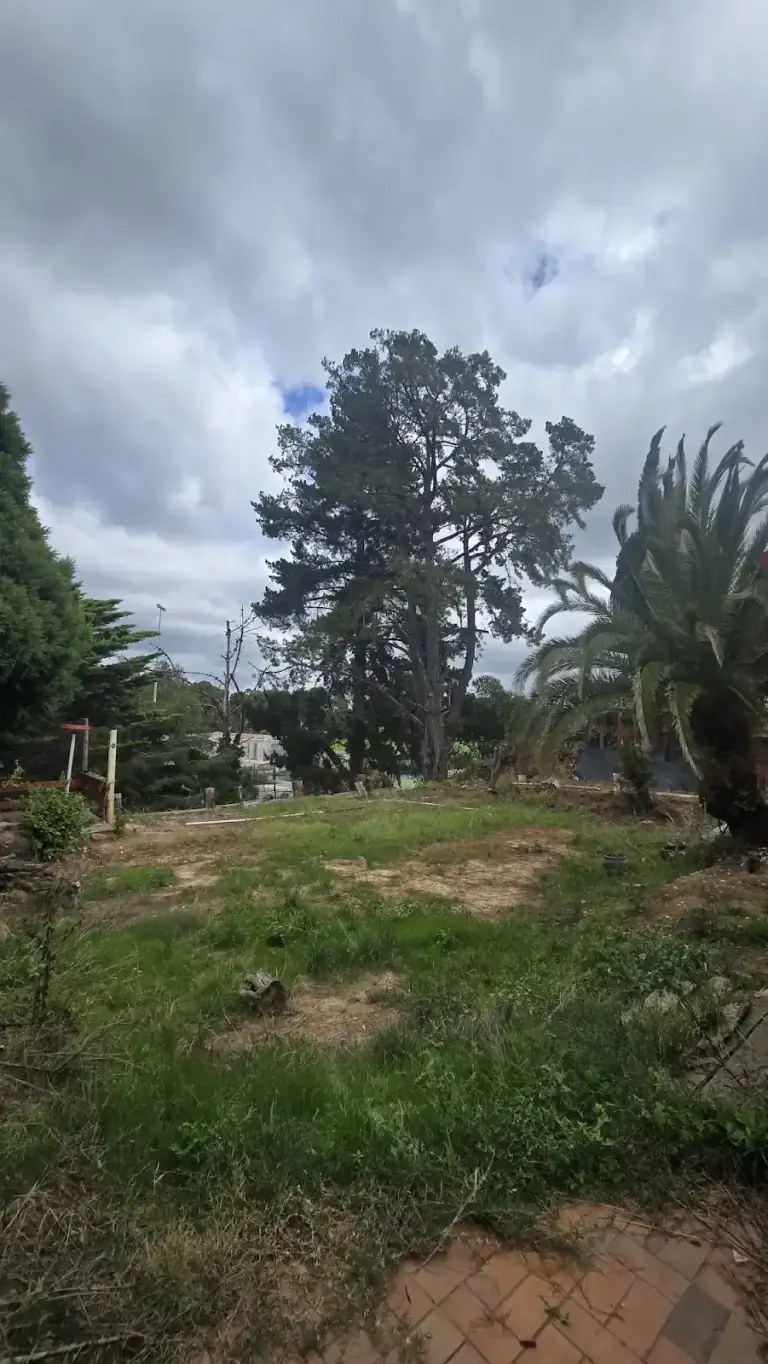
What AQF Level 5 means for arborist reports
The Australian Qualifications Framework (AQF) sets national education levels from Certificate I through to Doctoral Degree. Level 5 is the Diploma level. In arboriculture, the relevant qualification is the Diploma of Arboriculture, listed on the national register as AHC50524, which replaced AHC50520 on 1 May 2024 and sits within the Agriculture, Horticulture and Conservation and Land Management Training Package.
Councils refer to "AQF Level 5" or "consulting arborist" when they need a written assessment rather than physical tree work. The register describes the Diploma as the skills and knowledge for consulting arborists and tree managers, whose graduates assess trees and produce reports and documentation on tree health and risk, diagnose disorders and defects, and document recommendations within a legislative and regulatory framework. It is a different skill set from the practical qualifications held by climbing arborists and tree workers.
Consulting assessment versus physical tree work
The AQF framework separates arboriculture qualifications into different levels. Understanding the distinction helps explain why council specifies Level 5 for report work rather than accepting any arborist.
| AQF level | Qualification | Typical role |
|---|---|---|
| Level 3 | Certificate III in Arboriculture | Practical tree work: climbing, pruning, removal |
| Level 4 | Certificate IV in Arboriculture | Supervising tree work, basic maintenance advice |
| Level 5 | Diploma of Arboriculture | Consulting: written reports, risk assessment, planning advice |
The Level 3 and Level 5 descriptions follow the training.gov.au listings for AHC30824 (trade-level roles including climbing arborist, tree dismantling and removal) and AHC50524 (consulting arborists and tree managers). The Level 4 description is taken from training provider course descriptions rather than the register.
A consulting arborist (Level 5) inspects the tree, assesses its condition and prepares a written report with recommendations. They do not carry out the physical tree work. If council approves the application, you then engage a tree contractor (often Level 3) to do the pruning or removal. These are separate services with separate quotes.
What a Level 5 arborist report typically covers
The exact content depends on the purpose of the report and the planning controls that apply to your property. Most council-required reports include:
- Site inspection and tree identification (species, origin)
- Measurements: height, canopy spread, trunk diameter or circumference
- Health and structural condition assessment
- Useful life expectancy and arboricultural value of each tree
- Photos of the tree and any visible defects
- Analysis against the relevant planning controls (overlays, local laws, Clause 52.17, Clause 52.37)
- Recommendations with arboricultural justification
For development applications, the report may also include tree protection zones (TPZ), structural root zones (SRZ) and a tree protection plan showing how retained trees will be protected during construction. These follow the current Australian Standard AS 4970:2025, Protection of trees on development sites, which Standards Australia lists as superseding AS 4970-2009 (Standards Australia catalogue).
Not sure which report type suits your situation? See our guide:do I need an arborist report?
Example: Nillumbik's arborist report requirements
Each Melbourne council sets its own reporting requirements for planning applications. Nillumbik Shire Council publishes specific guidance that illustrates what councils typically ask for. Their requirements are outlined below as a practical example, not as a template for every council.
Nillumbik's published requirements
- Report prepared by an arborist with a minimum AQF Level 5 qualification in arboriculture
- Assessment following the current Australian Standard AS 4970:2025
- A numbered tree schedule covering species, measurements, health, condition, useful life expectancy, impact assessment and protection recommendations
- Tree protection zone (TPZ), structural root zone (SRZ) and notional root zone (NRZ) dimensions for each tree
- A property plan showing numbered tree locations, zone dimensions and whether each tree is retained, pruned or removed
Source:Nillumbik Shire Council, Arborist report for planning applications. Check your own council's requirements, as they may differ.
Checklist: what to prepare before requesting a quote
Having this information ready helps your arborist confirm the scope and provide an accurate quote quickly.
- The council letter or request that asks for the arborist report. This tells the arborist exactly what council expects, including any conditions or requests for further information.
- Property address so the arborist can check the planning scheme, overlays and local laws that apply.
- Photos of the tree or trees: a wide shot showing the full canopy and a closer shot of any visible issues. These help scope the job before the site visit.
- Development plans or drawings if you are building, extending, demolishing or excavating near trees.
- Approximate number of trees that council has asked about (a rough count is fine).
- Any planning permit conditions or previous reports relating to trees on the property.
You do not need all of these to start a conversation. If you are unsure about any of it, send what you have and your arborist will confirm what else is needed.
Confirming the scope with your arborist
Before the report is written, your arborist should confirm the scope. This means agreeing on what the report will address, which trees are included, and what council's specific requirements are. Points to clarify:
- Whether the report is for removal, pruning, development or a safety concern (this determines the report type and content)
- Which trees are included in the assessment and which are excluded
- Whether council has asked for additional documents such as a tree protection plan or impact assessment alongside the main report
- Turnaround time and any deadline from council for submitting the report
- The fixed price for the agreed scope, including whether GST and travel are included
A clear scope before work starts means the report addresses what council has asked for, without paying for work you do not need. If your application involves atree removal or atree health and safety concern, mention that when you request a quote so the arborist can tailor the report to the right purpose.
Frequently asked questions
Is a Level 5 arborist the same as a consulting arborist?
In practice, yes. Most councils and industry bodies use the terms interchangeably. A consulting arborist holds the Diploma of Arboriculture (AQF Level 5) and prepares written assessments and reports, rather than carrying out physical tree work such as pruning or removal.
Will a Level 5 arborist report guarantee my permit is approved?
No. The report provides the evidence and professional recommendations council needs to assess your application, but the planning decision remains with council. A well-prepared report that addresses the relevant controls improves your chances, though approval is never guaranteed.
Can a Level 3 or Level 4 arborist write the report instead?
It depends on your council. Some councils explicitly require AQF Level 5 for planning reports. Others accept reports from qualified arborists without specifying a level. Check the wording of your council's request or planning conditions. If it says Level 5 or Diploma, a lower qualification will not be accepted for that application.
What this guide does not cover
This guide explains what the qualification level means and what councils typically ask for. It does not verify any individual arborist's qualification, list every council's wording, or predict how a council will decide an application. Check the register or ask the arborist for their qualification, and rely on your council's own request for the exact requirement.
Sources
- training.gov.au: AHC50524 Diploma of Arboriculture (current from 1 May 2024, superseding AHC50520; accessed 29 September 2026)
- training.gov.au: AHC30824 Certificate III in Arboriculture (accessed 29 September 2026)
- Nillumbik Shire Council: Arborist report for planning applications (accessed 29 September 2026)
- Hobsons Bay City Council: Protecting trees during development (accessed 29 September 2026)
- Standards Australia catalogue: AS 4970:2025 Protection of trees on development sites (accessed 29 September 2026; the standard itself was not reviewed for this guide)
Get help with your Level 5 arborist report
Arbor Analytics prepares arborist reports for council planning applications across Melbourne. Send us the council letter, property address and any plans or photos. We will confirm the scope, report type and a fixed-price quote before work starts.
Get a quote